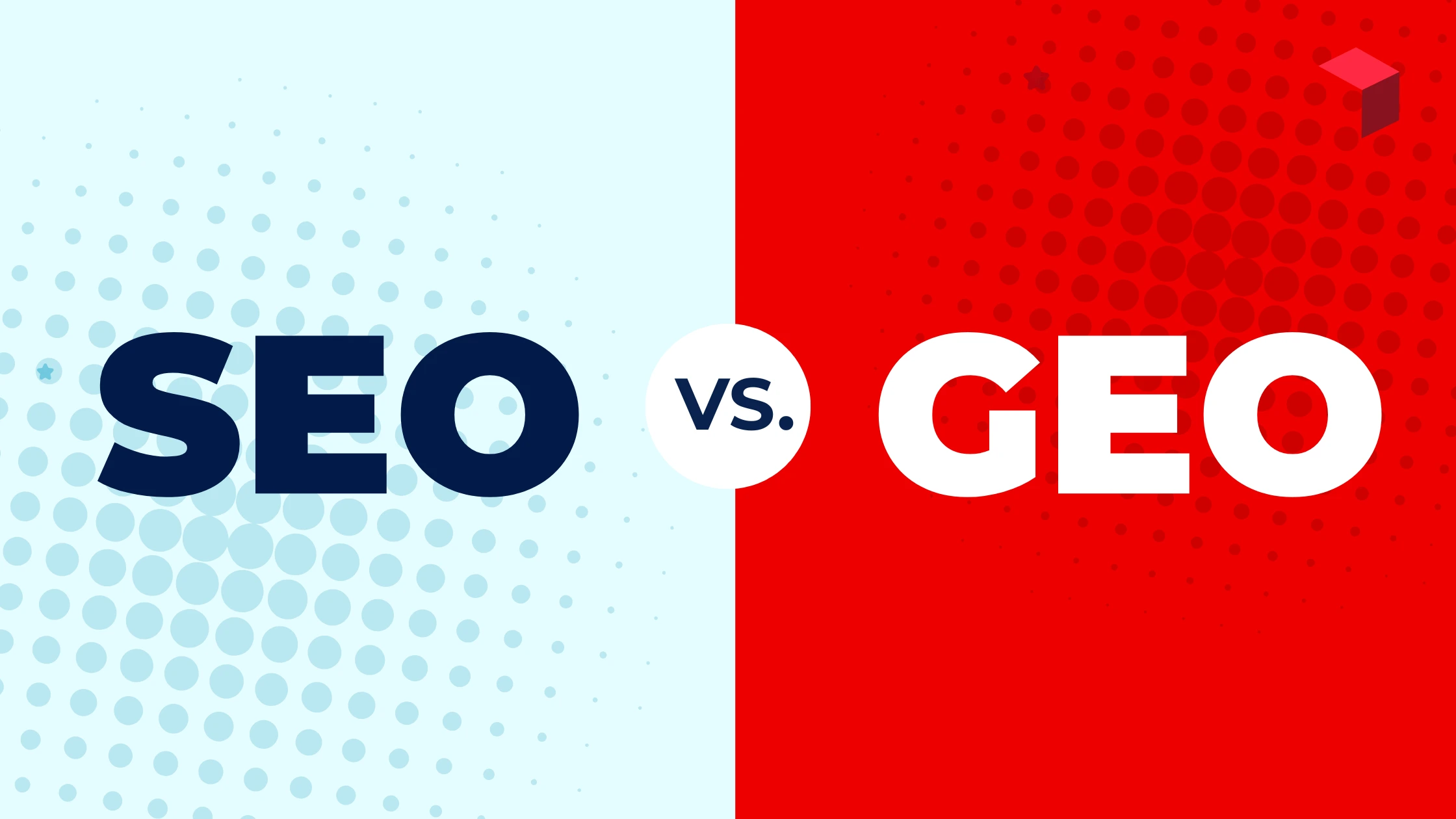
For colleges and universities, the better question is not SEO vs GEO, but how the two work together to influence student discovery. Traditional SEO helps prospective students find your institution through Google and other search engines. GEO helps your programs, expertise, outcomes, and institutional information appear in AI-generated answers from tools like ChatGPT, Perplexity, Google AI Overviews, Gemini, and Copilot.
A successful higher education search strategy increasingly requires both.
The team at iFactory has spent the past year running both sides of this comparison on real higher ed sites. We have seen what moves and what does not. We have watched institutions invest in GEO-only consultants and lose ground in Google. We have watched others double down on traditional SEO and disappear from AI answers.
The honest answer is in the middle, and it is more useful than either extreme. (For a broader take on why this shift is happening now, our AI Search Revolution post covers the underlying behavioral data.)
This post lays out the real differences between SEO and GEO for higher education marketing teams, the four overlapping foundations that serve both, and a practical framework for deciding where to spend your team’s time over the next two quarters.
SEO vs GEO: What Is the Difference?
SEO, or Search Engine Optimization, improves the visibility of college and university websites in traditional search results. For higher education marketers, that might mean ranking an academic program, admissions page, tuition resource, or financial aid page when a prospective student searches Google.
GEO, or Generative Engine Optimization, improves the likelihood that institutional content can be understood, referenced, and cited within AI-generated answers.
The growing practice sometimes described as GEO SEO combines these disciplines. Rather than choosing between traditional rankings and AI visibility, higher education teams optimize the same digital ecosystem for both search engines and generative AI platforms.
The difference is largely in the desired outcome. SEO typically aims to earn visibility and a click. GEO aims to make your institution part of the answer, even when the student never visits the source page.
SEO success is a click. GEO success is a citation, often without a click.
That distinction has cascading implications for how you write content, structure your site, signal authority, and measure results.
How is Your Website's AI Visibility?
How people are finding you is rapidly changing. Our AI Readiness Audit will show you:
- How users are seeing you on key queries
- Your competitive position across platforms
- Actionable next steps
What is the same from SEO and GEO?
Before getting to the differences, it is worth establishing what does not change. Most of the foundational work is shared. Skip these and neither strategy will work.
Clean information architecture
Both Google and AI engines need to crawl, render, and understand your site structure. Orphaned pages, broken links, duplicate URLs, and confusing navigation hurt both equally.
Fast, accessible pages
Core Web Vitals still matter. AI crawlers deprioritize slow-loading content the same way Google does. Accessibility (proper semantic HTML, alt text, descriptive headings) is now a search signal in both worlds.
Accurate metadata
Title tags, meta descriptions, canonical tags, and structured data are foundational for both. The metadata is the first thing every crawler reads.
Quality content that answers a real question
Both Google and AI engines reward content that is specific, well-organized, and genuinely useful. Google’s helpful content guidelines explicitly target thin or low-value pages, and AI systems consistently struggle to extract clear answers from content that does not actually answer the question being asked.
Authority signals
Backlinks, citations, mentions in trade press, and consistent NAP (name, address, phone) data across third-party sites all contribute to both traditional search rankings and AI citation likelihood.
The bottom line on overlap
If your SEO foundations are weak, your GEO results will be weak. There is no GEO-only shortcut around this. The institutions that have invested in solid SEO over the past decade are starting GEO from a stronger position than the ones that have not.
For a deeper look at how AI search engines actually evaluate this foundation work, our AISEO mechanics post walks through the retrieval and ranking process step by step.
What is genuinely different between SEO and GEO?
Here is where the real divergence happens. These are the differences that change how you brief writers, structure pages, and report results.
1. The unit of success
SEO is optimized for a click. The entire ranking system is built around the assumption that a searcher will see your listing, click through, and land on your page. Click-through rate is a primary metric. Bounce rate, time on page, and conversion rate matter because they validate the click.
GEO is optimized for a citation. A growing share of AI-generated answers do not include any links at all. Even when they do, the user often gets enough information from the synthesized answer that they never click through.
Zero-click is now the dominant pattern. SparkToro’s 2024 study using Datos clickstream data found that 58.5% of US Google searches end without a click, and Similarweb has reported that for news queries specifically, zero-click outcomes rose from 56% to 69% in the year following the AI Overviews launch. Your content has to do its work inside the AI’s summary, because that is often the only place a prospective student will see it.
This changes how you write. SEO copy can hold a key piece of information back to incentivize the click. GEO copy cannot.
If the answer to "what is the tuition for your online MBA?" is not extractable from a clean paragraph or table on the page, the AI will not cite you, period.
2. The query format
Traditional higher education SEO has often focused on relatively short searches such as:
- nursing programs in Boston
- online MBA program
- colleges with cybersecurity degrees
- financial aid for transfer students
AI search makes the same discovery process much more conversational. A prospective student might instead ask:
- What colleges near Boston have strong nursing programs and good clinical placement rates?
- Which online MBA programs are flexible enough for someone working full time?
- What universities offer cybersecurity degrees with internship opportunities?
- Which colleges provide strong financial aid for transfer students?
This is an important difference in SEO vs GEO for higher education. Traditional keyword research still matters, but GEO requires institutions to understand the broader questions, comparisons, and decision criteria behind those keywords.
The exact length difference depends on which AI tool you measure. Nectiv’s analysis of ChatGPT search queries found an average of 5.48 words, compared to roughly 3 to 4 words for typical Google queries. For Google’s AI Mode, the average query length is 7.22 words. Direct prompts to ChatGPT (without the search function) run substantially longer, with Semrush data cited by Otterly putting the average at 23 words. The pattern across all measurements is consistent: AI users supply more context per query, and the optimization strategy has to address the intent behind that context, not just the keywords inside it.
In practice, this means FAQ sections that mirror real student questions outperform keyword-dense paragraphs. Long-form Q&A content gets cited more often than marketing copy. The institutions that have rewritten their program pages to lead with the questions students actually ask are the ones getting cited.
Our GEO fundamentals post covers the program page rewrite playbook in detail.
3. The competitive set
SEO is a single-front problem. Google is by far the dominant search engine. Optimizing for Google generally optimizes for Bing and other traditional engines as well. The ranking signals are well documented after twenty years of SEO research.
GEO is a multi-front problem. Each AI platform has different ranking heuristics, and the differences are measurable. Local Falcon’s analysis of citation overlap found Perplexity citing more than 91% of the same domains as Google’s top 10 organic results, AI Overviews showing roughly 86% domain overlap, and ChatGPT showing the weakest overlap of any platform studied. Different platforms also weight signals differently: some lean heavily on freshness, others on authority, others on schema markup.
If a strategy works on Google, it will probably work on Perplexity. It may not work on ChatGPT.
The practical implication is that you cannot just monitor Google Search Console and call it done. Tracking AI visibility across multiple engines requires either manual testing of priority queries or specialized tooling. Profound, Otterly, and AthenaHQ are among the platforms in this emerging category, with feature sets purpose-built for citation tracking across ChatGPT, Perplexity, and Google AI Overviews.
4. The role of authority
SEO authority is largely about backlinks. Google’s PageRank algorithm, in its various modern descendants, still treats links from authoritative domains as the primary trust signal. A program page with fifty .edu backlinks will outperform an identical page with ten, all else being equal.
GEO authority is about verifiable presence across the open web. AI engines synthesize their understanding of your institution from many sources: your own website, trade press, academic publications, accreditation directories, Wikipedia, LinkedIn, faculty profiles on third-party platforms, and structured data feeds.
Mentions matter more than links. This is completely counterintuitive one for anyone who has spent years thinking about SEO authority through a backlink lens. Ahrefs analyzed 75,000 brands and found that branded web mentions correlate with AI Overview visibility at 0.664, while backlinks correlate at just 0.218, a roughly three-to-one gap. A follow-up study extended the analysis across ChatGPT, Google AI Mode, and AI Overviews and the pattern held: the top three correlating factors across every AI platform tested were branded web mentions, branded anchors, and branded search volume. Total backlink count, domain rating, and content volume sat near the bottom. Consistency across many sources matters more than volume from a few. An institution that is named accurately and consistently across many sources will get cited more often than one with stronger backlinks but contradictory information across the web.
Inconsistency is the silent killer here, and it usually starts as content sprawl. Our post on whether content sprawl is weakening your AI visibility lays out how sprawl quickly leads to inconsistency.
For the deeper authority playbook, iFactory’s GEO authority and future-proofing post is a great companion read. The short version: if you have not audited what the open web says about your institution recently, you are leaving authority on the table.
5. The measurement model
SEO measurement is mature. Rankings, organic traffic, click-through rate, conversion rate, and revenue attribution are well understood. Google Search Console, GA4, and a stack of third-party tools provide rich, near-real-time data.
GEO measurement is still in it’s infancy, but here are the metrics that matter:
- Citation frequency in AI responses
- Share of voice in comparative queries
- Accuracy of AI-generated descriptions of your institution
- Referral traffic from AI engines (now reported in GA4 as ChatGPT, Perplexity, and Gemini referrers)
The tooling to track all of this is improving fast, but it is not yet the seamless dashboard experience SEO teams are used to.
Traffic from AIs is valuable. Ahrefs published an analysis of its own traffic in June 2025 showing that AI search visitors converted at 23 times the rate of traditional organic search visitors: just 0.5% of traffic drove 12.1% of signups. A separate Semrush study of 500+ B2B topics found AI search traffic converting at 4.4x organic. The headline number varies by industry and methodology, but the pattern is consistent across studies. Even at the lower end of the range, the conversion premium changes how you should think about the value of an AI citation versus a traditional click.
For most higher ed teams, the practical answer is to add three new measurements to existing SEO reporting: a monthly manual audit of how the institution appears in ChatGPT and Perplexity for top student-facing queries, GA4 referrer tracking for AI engines, and a citation-tracking tool.
Where GEO and SEO Work Together
There is real overlap between SEO and GEO, but it is unstable. BrightEdge’s longitudinal study of Google AI Overview citations found that overlap with traditional organic search results grew from 32% in mid-2024 to 54% by October 2025, with Education specifically showing one of the strongest overlap surges of any vertical (a 53.2 percentage point increase). More recent analyses from Ahrefs and BrightEdge in early 2026 have shown that overlap dropping again, to somewhere between 17% and 38%. The point is that the relationship between traditional ranking and AI citation is moving, and the institutions that win are the ones building visibility across both, not relying on one to translate to the other.
This is the source of the “GEO is just SEO” claim. It is partially true but also incomplete.
The strong-overlap moments mean that solid SEO foundations carry a long way. If you have been doing SEO well, you are not starting GEO from zero. But the share of AI citations that come from outside the top 10 (or outside Google rankings entirely) is where the differentiation happens.
Optimizing for traditional rankings alone is increasingly a defensive position. Optimizing for traditional rankings plus the AI-specific signals is the offensive position.
With zero-click rates climbing and AI Overviews triggering on a growing share of queries, ranking #1 traditionally no longer captures the same share of attention it did five years ago.
Where to spend your next dollar
For most higher ed marketing teams, the practical question is not “should we do SEO or GEO?” It is “given limited time and budget, what should we do first?”
Here is the framework iFactory uses with clients, in priority order.
If your SEO foundations are broken, fix them first
Slow pages, missing schema, contradictory program information, sprawl from old microsites. None of the GEO work matters until these basics are in place. A Screaming Frog crawl integrated with your GA4 data will surface the highest-impact issues in a single afternoon.
If your SEO is solid but your AI visibility is unknown, audit it
Run your top twenty student-facing queries through ChatGPT, Perplexity, and Google AI Overviews. Document what comes back. Note where your institution appears, where it does not, and where competitors are getting cited instead. This baseline is the most important data point for the rest of your GEO work.
If your AI visibility is weak in specific query categories, fix those pages first
Start with the pages that play the largest role in prospective-student discovery and decision-making: high-priority academic programs, admissions requirements, tuition and financial aid, career outcomes, transfer information, and other pages that answer common enrollment questions. Rewrite intros to lead with concrete outcomes. Add structured FAQ sections. Implement EducationalOccupationalProgram, Course, and FAQPage schema. Validate the schema with Google’s Rich Results Test before pushing live.
The schema is also important: research from BrightEdge and others has shown pages with comprehensive schema markup are 2-4x more likely to appear in Google AI Overviews, and FAQPage schema specifically tends to be among the highest-impact types because it matches how AI systems extract and present answers. A worth while note: not every study agrees on the magnitude of the effect, and Google has been clear that schema is not a guaranteed ranking factor.
Our GEO technical foundations post covers the full schema implementation walkthrough.
If your AI visibility is broadly weak across the board, the issue is authority, not pages
This is the longer game. It involves earning third-party mentions, ensuring consistent institutional information across directories and review sites, supporting faculty thought leadership on external platforms, and building a content governance cadence so accuracy does not erode over time.
iFactory’s GEO implementation roadmap walks through this phase in detail.
Do not stop investing in traditional SEO
Google still drives the majority of organic traffic to most higher ed sites. The Ahrefs conversion data referenced earlier in this post supports the case that AI search is filtering visitors before they click: students who arrive at your site after asking ChatGPT or Perplexity have already done some of their research inside the AI tool. That changes the funnel position they arrive in, and the case for traditional SEO becomes less about volume and more about being the trusted destination at the bottom of an AI-shaped journey.
Treat SEO and GEO as two layers of the same strategy, not as a sequential migration from one to the other.
This integrated approach is exactly how iFactory’s AI visibility services are structured.
Common questions higher ed teams are asking
Should we hire a GEO specialist or train our existing SEO team?
For most institutions, training the existing team is the first step. The conceptual leap from SEO to GEO is smaller than the marketing of GEO consultancies suggests. The foundations are shared.
The new skills (schema markup at scale, AI citation tracking, content structuring for extraction) are well within reach for a competent SEO team that already knows the foundations. Where a specialist is genuinely useful is in setting up the initial measurement framework and running the first audit. After that, it is execution work that an in-house team can sustain.
Is traditional SEO going to die?
No. Google is still the largest search engine on the planet by an order of magnitude, and even Google AI Overviews are built on top of traditional search infrastructure.
What is changing is the role of traditional SEO. It is becoming the foundation that GEO sits on, rather than the entire strategy. The institutions that abandon SEO entirely will lose ground. The ones that treat it as the only strategy will also lose ground.
How long until our GEO investment shows results?
Faster than people expect on individual pages. Slower than people expect on institutional authority.
A focused effort on five to ten high-priority program pages can produce visible movement in AI citations within a quarter. Broader institutional authority, the kind that gets your school named in AI answers without an explicit link, takes longer and depends heavily on accuracy and freshness over time.
What is the single most important thing to fix first?
Information completeness on your top program pages. Before worrying about schema markup or third-party authority signals, make sure the highest-enrollment-value programs have clear, current, extractable answers to the questions prospective students are actually asking AI tools.
Tuition. Format. Duration. Outcomes. Application requirements.
If a model has to infer those facts from three different pages, it will not cite you. If they are listed clearly in a single section, it will.
The bottom line
GEO is not a replacement for SEO. It is also not a re-labeling of it. GEO is a new layer of optimization that sits on top of solid SEO foundations and addresses a discovery channel (AI search) that did not meaningfully exist three years ago and is now influencing a growing share of higher ed enrollment decisions.
The institutions that will own the next generation of student discovery are the ones that treat SEO and GEO as a single integrated strategy with two complementary outputs: traditional click-through traffic from Google, and citation visibility in AI-generated answers. The teams that do both well are the ones whose names will be the default answer when a prospective student asks ChatGPT for program recommendations.
This is not theory. iFactory partnered with North Hennepin Community College on a redesign and 12-month SEO campaign that contributed to new student enrollment improving by close to 15%. San Jacinto College, serving more than 70,000 students, used a similar integrated approach: a flexible design system, career-track infographics, and a streamlined content workflow with built-in expert review. The pattern across these engagements is consistent: the institutions that rebuild content for clarity, structure, and student questions tend to see compounding gains across both traditional search and AI visibility.
That answer is being shaped right now, query by query, citation by citation. The institutions that are building visible authority today are compounding it. The ones that are waiting for the category to settle are watching their consideration set quietly shrink.
For more on where this is heading next, see our 5 predictions for higher education marketing in 2026.
If you want to see where your institution currently stands, iFactory’s free AI Search Readiness Audit evaluates how AI search engines find, understand, and recommend your school today. It is the clearest starting point for any institution serious about getting both sides of this strategy right.
Frequently asked questions
SEO (Search Engine Optimization) makes your website rank in traditional search engine results so prospective students click through to your pages. GEO (Generative Engine Optimization) makes your content discoverable and citable by AI search engines like ChatGPT, Perplexity, and Google AI Overviews so your institution gets named in the synthesized answer.
SEO success is measured by clicks. GEO success is measured by citations, often without a click.
No. Google still drives the majority of organic traffic to higher ed sites, and traditional SEO foundations are required for GEO to work. GEO is a new layer of optimization that sits on top of solid SEO. The institutions that win in the next few years will do both well, not pick one over the other.
Largely the same content, optimized differently. The same program page can serve both, but it has to lead with extractable facts (tuition, outcomes, format, requirements), include FAQ sections that mirror real student questions, and use schema markup to make information machine-readable.
Content that is optimized only for traditional SEO often gets passed over by AI engines because the answer is not extractable from a clean paragraph. Our GEO fundamentals post covers the rewriting playbook in detail.
The basics are non-negotiable: clean site architecture, fast pages, accurate metadata, working internal links, and accurate program information across the site.
Beyond that, GEO can run in parallel with ongoing SEO improvements. The institutions that wait for “perfect SEO” before starting GEO are losing ground every month they delay.
Treating it as a transition rather than an expansion. The teams that abandon traditional SEO to focus exclusively on GEO lose Google traffic. The teams that continue running traditional SEO without addressing GEO disappear from AI answers.
The right move is to maintain SEO investment while adding GEO-specific work on top of it. Our GEO authority and future-proofing post goes deeper on the strategic framing.
Three measurements matter:
- Direct citation tracking. Is your institution being named in AI responses to relevant queries? This is most easily done through manual monthly testing of top student-facing queries in ChatGPT, Perplexity, and Google AI Overviews, supplemented by tools like Profound, Otterly, or AthenaHQ.
- Referral traffic from AI engines. GA4 now reports ChatGPT, Perplexity, and Gemini as referrers.
- Share of voice in comparative queries. When a student asks AI for “good schools for X,” does your institution appear in the comparison set?
Start with an audit of your current state. Run a Screaming Frog crawl integrated with GA4 to identify your most valuable pages and their technical health. Run your top twenty student-facing queries through ChatGPT and Perplexity to baseline AI visibility. Validate your schema markup with Google’s Rich Results Test.
The combined data tells you exactly which pages to fix first. iFactory’s GEO implementation roadmap walks through this audit process in detail.
Not Sure Where Your Institution Stands?
iFactory’s AI Search Readiness Audit evaluates whether tools like ChatGPT, Perplexity, Google AI Overviews, and Claude can find, understand, and recommend your institution to prospective students.